
444A.md (2785B)
1 Source: https://codeforces.com/problemset/problem/444/A 2 3 A. DZY Loves Physics 4 5 time limit per test 6 7 1 second 8 9 memory limit per test 10 11 256 megabytes 12 13 input 14 15 stdin 16 17 output 18 19 stdout 20 21 DZY loves Physics, and he enjoys calculating density. 22 23 Almost everything has density, even a graph. We define the density of a non-directed graph (nodes and edges of the graph have some values) as follows: 24 25 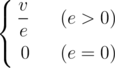 where *v* is the sum of the values of the nodes, *e* is the sum of the values of the edges. 26 27 Once DZY got a graph *G*, now he wants to find a connected induced subgraph *G*' of the graph, such that the density of *G*' is as large as possible. 28 29 An induced subgraph *G*'(*V*', *E*') of a graph *G*(*V*, *E*) is a graph that satisfies: 30 31 * ; 32 * edge  if and only if , and edge ; 33 * the value of an edge in *G*' is the same as the value of the corresponding edge in *G*, so as the value of a node. 34 35 Help DZY to find the induced subgraph with maximum density. Note that the induced subgraph you choose must be connected. 36 37  38 39 Input 40 41 The first line contains two space-separated integers *n* (1 ≤ *n* ≤ 500), . Integer *n* represents the number of nodes of the graph *G*, *m* represents the number of edges. 42 43 The second line contains *n* space-separated integers *x**i* (1 ≤ *x**i* ≤ 106), where *x**i* represents the value of the *i*-th node. Consider the graph nodes are numbered from 1 to *n*. 44 45 Each of the next *m* lines contains three space-separated integers *a**i*, *b**i*, *c**i* (1 ≤ *a**i* < *b**i* ≤ *n*; 1 ≤ *c**i* ≤ 103), denoting an edge between node *a**i* and *b**i* with value *c**i*. The graph won't contain multiple edges. 46 47 Output 48 49 Output a real number denoting the answer, with an absolute or relative error of at most 10- 9. 50 51 Examples 52 53 Input 54 55 ``` 56 1 0 57 1 58 ``` 59 60 Output 61 62 ``` 63 0.000000000000000 64 ``` 65 66 Input 67 68 ``` 69 2 1 70 1 2 71 1 2 1 72 ``` 73 74 Output 75 76 ``` 77 3.000000000000000 78 ``` 79 80 Input 81 82 ``` 83 5 6 84 13 56 73 98 17 85 1 2 56 86 1 3 29 87 1 4 42 88 2 3 95 89 2 4 88 90 3 4 63 91 ``` 92 93 Output 94 95 ``` 96 2.965517241379311 97 ``` 98 99 Note 100 101 In the first sample, you can only choose an empty subgraph, or the subgraph containing only node 1. 102 103 In the second sample, choosing the whole graph is optimal.